It’s not just you.
Pharmacies in England dispensed 388,411 ADHD prescription items in May 2026. That’s 34% more than the same month a year before, and it’s gone up every year since 2021.
Nobody publishes live pharmacy stock in the UK, so this can’t tell you what’s on the shelf near you. What it does show is what England actually dispensed, month by month, down to your strength. The data runs about two to three months behind.
Is it your strength? ↓·What to do right now ↓
View as a table
Is it your strength?
This is the bit nobody else shows you. UK shortages tend to hit one strength at a time, which is why the pharmacy can have 70mg on the shelf and none of yours.
View as a table
Per-strength figures are shown for lisdexamfetamine, which is where most of the searches landing here come from. Methylphenidate is split across several brands with different release profiles, so it needs handling properly rather than quickly.
What to do right now
In rough order of what tends to work fastest.
- Ask what they can order, not what’s on the shelf. Pharmacies see live wholesaler availability in their ordering system. Something that’s out the back is often orderable for tomorrow.
- Ask which strengths they can get. If yours is short and another isn’t, that’s the useful thing to know before you ring your prescriber.
- Ask whether a Serious Shortage Protocol applies. An SSP lets the pharmacist give you a different quantity, strength or formulation without going back to your prescriber. They’re issued per product and they expire, so ask specifically.
- Take the prescription back if you need to. You’re not obliged to leave it anywhere. If it’s already been logged, ask for it back so somewhere else can dispense it.
- Ring your prescriber about an equivalent. Two 20mg instead of one 40mg needs a new prescription, and switching between modified-release methylphenidate brands isn’t automatic because the release profiles differ. Both are prescriber decisions.
- Say something early rather than rationing quietly. If you’re running low, tell your prescriber before you start stretching doses. Don’t change a stimulant dose on your own.
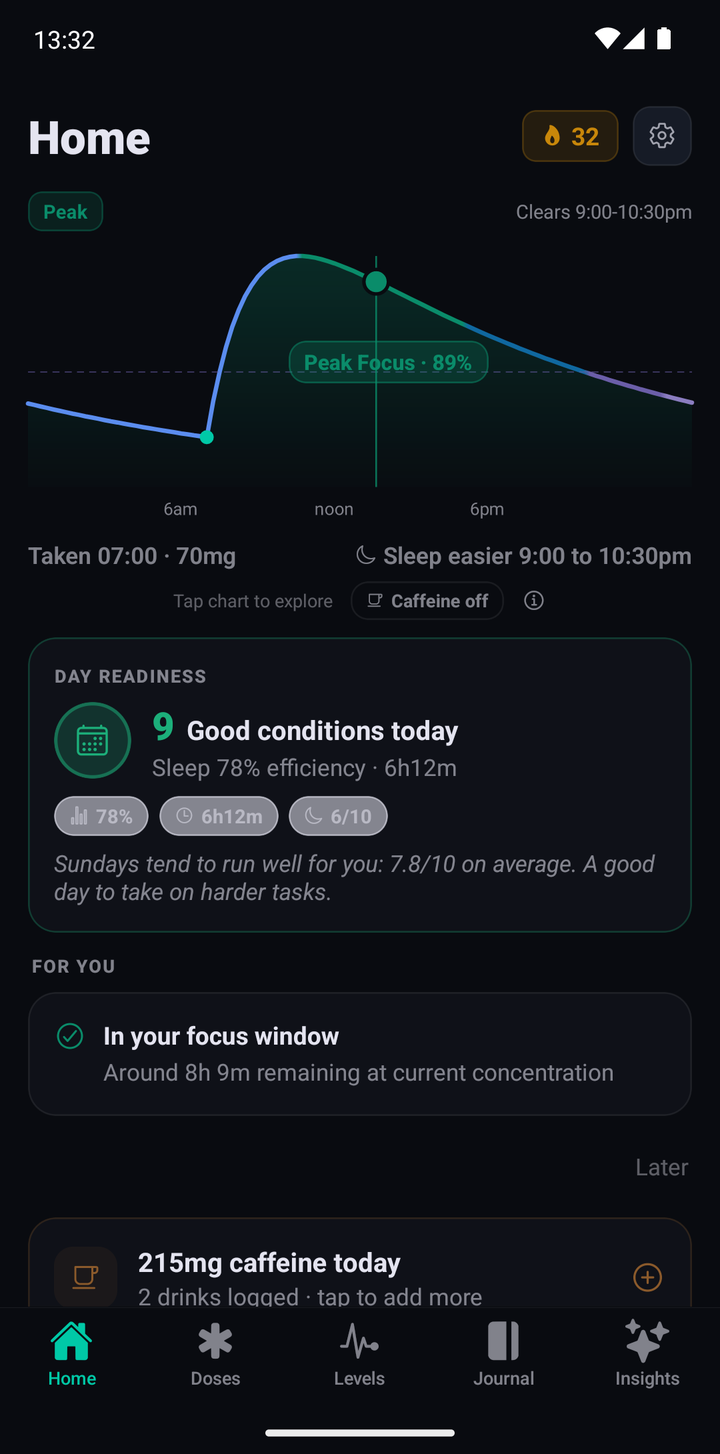
If you do end up moved to a different strength or brand, ADHDose recalibrates your curve to the new dose, so you can see what the change actually does to your day. Get notified at launch →
What shortages have looked like before
Nobody publishes an honest forecast for how long a shortage lasts. What we can show you is what the last big one did.
View as a table
In autumn 2023 a national supply disruption hit several ADHD medicines at once. Lisdexamfetamine dispensing fell from around 49,000 items in August to about 35,000 by December, and the strength mix scrambled for four months as pharmacists and prescribers moved people onto whatever was available. Supply recovered over the following months, and nobody could have told you the timetable in advance. The honest reading is that shortages have ended before, and the way through them was the list above.
For the current official position, the live signals are the NHSBSA Serious Shortage Protocol list and your pharmacist’s wholesaler screen.
Is it everywhere?
Dispensing rose in 35 of the 36 NHS regions in England over the last year.
View as a table
About this data
Every figure on this page comes from OpenPrescribing, which republishes NHS England’s monthly primary-care dispensing data. The numbers count prescription items dispensed in the community in England. They don’t cover hospitals, Scotland, Wales or Northern Ireland, and they publish about two to three months behind.
Dispensing volume measures what reached patients. It’s a proxy for supply rather than a measure of it: a rise means more medication was dispensed, and on its own it isn’t evidence of shortage or of plenty. That’s why this page doesn’t compute a severity rating. The data can’t support one, so we don’t.
The strength figures sum the generic and branded versions of each strength, because a 30mg prescription is a 30mg prescription whichever box it comes in. The six strength series reconcile exactly to the molecule total. We also chose dots over a map for the regional section: a map of NHS regions mostly shows you which regions are physically biggest, which isn’t the question.
The page checks for newer data when you open it. If the check fails you’ll see figures cached to the month shown in the captions, and nothing else changes.
I’m Matt, I built ADHDose because I needed it myself. It’s for timing the doses you’ve actually got, which is a different problem from finding them, and you’re welcome to have a look if that’s useful to you.
Written by Matt, founder of ADHDose. Charts update automatically from NHS data.
Every figure on this page comes from published NHS dispensing data, fetched from the source below. The page itself has not been through clinical review, so use it to prepare for a conversation with your prescriber or pharmacist rather than in place of one. ADHDose is a tracking tool, not a medical device, and does not diagnose or prescribe.
- OpenPrescribing, Bennett Institute for Applied Data Science, University of Oxford, for England dispensing volumes by BNF code. openprescribing.net
- NHS Business Services Authority, for current and historical Serious Shortage Protocols. nhsbsa.nhs.uk
- NICE guideline NG87: attention deficit hyperactivity disorder, diagnosis and management, on switching dose or formulation with a specialist. nice.org.uk/guidance/ng87
Spotted an error? [email protected]